BlogJanuary 5, 2025Designing a Scalable URL Shortener
This article is part of the Vaibhav Jha technical writing series on backend systems, software architecture, and core computer science topics explained with practical developer context.
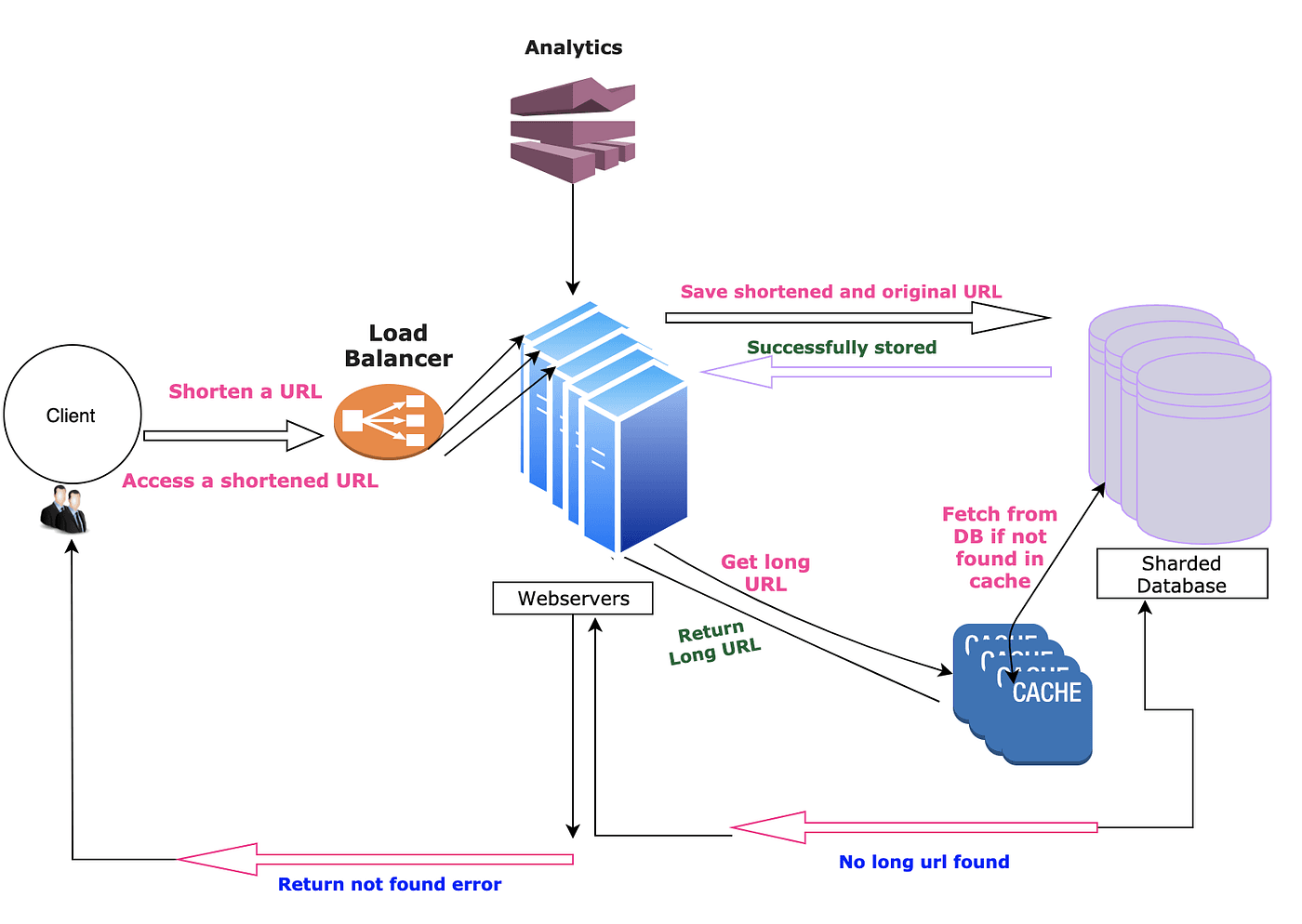
- Accept a long URL
- Generate a short unique identifier
- Store the mapping
- Redirect users when short URL is accessed
The system consists of:
- API Server → handles requests
- Database → stores URL mappings
- Cache (Redis) → speeds up lookups
- Load Balancer → distributes traffic
- User sends long URL to backend
- System generates a unique short code
- Mapping is stored in database
- Short URL is returned
Example:
- User visits short URL
- Server looks up original URL
- Redirect response is returned
- Hash the original URL
- Encode using Base62 (letters + numbers)
Pros:
Cons:
Option 2 — Auto Increment ID
- Use database ID
- Convert to Base62
Pros:
Cons:
Option 3 — Random Strings
- Generate random 6–8 character string
Pros:
Cons:
Basic schema:
- id
- short_code
- original_url
- created_at
Indexes:
- index on short_code for fast lookup
Use Redis:
- Store frequently accessed URLs
- Reduce database load
- Improve latency
Most traffic is read-heavy (redirects).
- Cache hot URLs
- Use read replicas
Distribute incoming requests across multiple servers.
- Sharding by hash of short_code
- Partitioning large datasets
If generated short code already exists:
- Regenerate new code
- Or append randomness
Optional features:
- Expiry time for links
- Background jobs to delete old entries
Track:
- Number of clicks
- User location
- Device type
Store in separate analytics system to avoid slowing core service.
- Ensuring uniqueness of short URLs
- Handling high read traffic
- Maintaining low latency
- Avoiding database bottlenecks
Real-World Considerations
- Rate limiting to prevent abuse
- Spam detection
- Secure redirects
- Monitoring and logging
A URL shortener is a classic example of a system that looks simple but requires thoughtful design to scale efficiently.
It combines database design, caching, and distributed systems to handle large volumes of traffic reliably.